

What is Giclee?
First of all, know that "Giclee" is a made-up word that sounds French and very classy. It more or less means "to spray." It is pronounced gee-clay or zhee-clay but there are at least a half dozen different pronunciations online. It was originally created because "inkjet printer" sounded like something almost everyone now has on their desktop.
The History of Giclee
The printers in use in the mid 90's for printing art work, Iris Inkjets, were actually made to create proofs for the printing industry and the prints had a reputation for fading quickly. So there was a need for a new name when better inks were developed. But even now not all inkjet printers are created equal and most printers can not create a Giclee worth selling as a fine art print:
-
Desktop inkjet printers generally use dyes for ink. The colors are bright and they work very well for business graphics and even snapshot photographs but they are not very permanent. A print can fade in a matter of months.
-
Wide format inkjet printers found in sign shops and many photo labs are normally designed to use pigment inks that withstand outdoor or harsh environments (like floor graphics or vehicle wraps for example). They are very permanent but do not have very good colors and often have noticeable printer dots. The printers can print very quickly but the quality is not very high.
-
Photographic quality wide format inkjet printers combine the best of both of these types. They use pigment inks that are archival (they last on paper over 100 years) but they produce bright rich colors with smooth tones that have no visible dots. Epson pioneered this type of printer and called it "Ultrachrome." It is the most popular printer amongst photographers today and a great choice for reproducing art of all kinds. This type of printer is now what is used by the best Giclee printing studios.
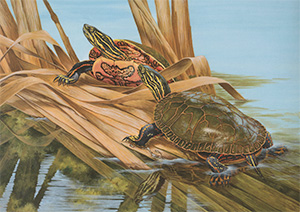
16X20 Giclee Print by Tim Turenne
Art work copyright by Tim Turenne.
Giclee = Archival Ink + Archival Paper
Giclee can be on paper or canvas or in theory any other material. However the term normally does imply archival permanence, which 100% rag papers provide. Add archival ink to archival material and you have a work of art that can last for hundreds of years. Some people call Giclee prints "Ultrachrome" prints after the name of the Epson ink. The fine art world does not like to name art work after the machine or chemicals that produce it. Therefore the correct museum term for a Giclee is actually "archival pigment print" or "digital pigment print."
One Print or Many—Artist's Choice
Although you could run unlimited copies of a Giclee print, the printers are slow and the inks are very expensive so it is doubtful that edition sizes would exceed more than a couple of hundred. More typically an edition would be about a hundred or less. Even a so called "open edition" of Giclee prints may exist in only a handful of copies.
Not Like Offset "Limited Edition"
Giclee prints are very different than the editions of art produced in the 80's and 90's where editions of five thousand or more were common. Those prints were made on offset presses where the cost per print dropped substantially when the number of prints went up. In fact it often cost only a few dollars more to get 2000 prints than it would have for 1000. So why not crank them out (particularly given the very high initial setup costs)? But for most artists selling thousands or even hundreds of prints of an image is unreasonable. Thus Giclee has replaced offset prints for artists today since you can order only the prints you need and yet reorder more at any time.
Giclee Are Fine Prints
Giclee are really more like hand printed photographs or fine art printmaking. They are very permanent, have beautiful tones and colors, are normally done in modest quantities and require a degree of skill to produce well. And best of all a good one will look virtually indistinguishable from the original.
Art work copyright by Tim Turenne
Finding The Best Giclee Printer For Your Work.
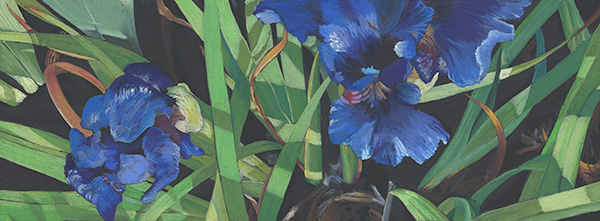
Maura Williams 14X38 Giclee
1) Look for someone who specializes in Giclee. Many of the printers who go out of business are wedding photographers, frame shops, galleries or sign printers that were doing Giclee on the side. If a company does not make working for artists their number one priority you can not expect top-notch quality or service.
2) A good Giclee print company will have constantly invested in new equipment. In the twenty plus years we have been in the Giclee business we have gone through six generations of Epson printers to take advantage of improvements in quality.
3) Look for an artist to do your printing, not a technician, or "color management specialist." First of all, another artist will understand fine art media and know how to handle fragile art like pastels, chalk and charcoal. But more importantly, they will want your art to be reproduced as well as they expect their own art printed. Ideally you will work directly with this person and not a sales person.
4) Color matching is a learned skill. Make sure you are dealing with someone who has spent a minimum of five years (ten or more is better) matching color. This may include experience in color photography printing or working in the traditional print field in prepress as well as Giclee printing. (The two of us have a combined experience of over 75 years in the field).
5) The best Giclee printers use the best inks and materials. We use only premium papers like Museo and Hahnemühle. For ink, tests have shown Epson Ultrachrome HD to be the best for color quality and longevity.
Remember Giclee printing is an art. As Norman Sanders, a printer, photographer and author of the book Photographing for Publication said: “There is a reason printing is called the Graphics Arts; it is an art—not a science.“ There is no magic software to match your original to a printers output. It takes an artist's eye to understand another artist's touch. If a printer tells you they have a prefect "profile" to match your artwork, run the other way!
What do you do if your printer does go out of business or you are unhappy with their quality? Get your files. Be aware that they probably will not print exactly the same on a different machine. But if you have a good print or the original to match, the files can probably be used by another company to produce new prints that will be every bit as good as your original art work.
Call us at at: 715.792.5556 or you can e-mail us at: david@husomandrose.com for more information.

Copyright © 2024 Husom & Rose Photographics. All Rights Reserved.
Art work copyright by Maura Williams.
What is Giclee?
First of all, know that "Giclee" is a made-up word that sounds French and very classy. It more or less means "to spray." It is pronounced gee-clay or zhee-clay but there are at least a half dozen different pronunciations online. It was originally created because "inkjet printer" sounded like something almost everyone now has on their desktop.
The printers in use in the mid 90's for printing art work, Iris Inkjets, were actually made to create proofs for the printing industry and the prints had a reputation for fading quickly. But even now not all inkjet printers are created equal and most printers can not create a Giclee worth selling as a fine art print:
-
Desktop inkjet printers generally use dyes for ink. The colors are bright and they work very well for business graphics and even snapshot photographs but they are not very permanent. A print can fade in a matter of months.
-
Wide format inkjet printers found in sign and frame shops and many photo printers are designed to use pigment inks that withstand outdoor or harsh environments. They are very permanent but do not have very good colors and often have noticeable printer dots.
-
Photographic quality wide format inkjet printers combine the best of both of these types. They use pigment inks that are archival (they last on paper over 100 years) but they produce bright rich colors with smooth tones that have no visible dots. Epson pioneered this type of printer and called it "Ultrachrome." It is the most popular printer amongst photographers today and a great choice for reproducing art of all kinds. This type of printer is now what is used by the best Giclee printing studios.
Giclee = Archival Ink + Archival Paper
Giclee can be on paper or canvas or in theory any other material. However the term normally does imply archival permanence, which 100% rag papers provide. Add archival ink to archival material and you have a work of art that can last for hundreds of years. The correct museum term for a Giclee is actually "archival pigment print" or "digital pigment print."
One Print or Many—Artist's Choice
Although you could run unlimited copies of a Giclee print, the printers are slow and the inks are very expensive so it is doubtful that edition sizes would exceed more than a couple of hundred. More typically an edition would be about a hundred or less. Even a so called "open edition" of Giclee prints may exist in only a handful of copies.
Giclee Are Fine Prints
Giclee are really more like hand printed photographs or fine art printmaking. They are very permanent, have beautiful tones and colors, are normally done in modest quantities and require a degree of skill to produce well. And best of all a good one will look virtually indistinguishable from the original.
Finding The Best Giclee Printer For Your Work.
Maura Williams 14X38 Giclee
1) Look for someone who specializes in Giclee. Many of the printers who go out of business were doing Giclee on the side. If a company does not make working for artists their number one priority you can not expect top-notch quality or service.
2) A good Giclee print company will have constantly invested in new equipment.
3) Look for an artist to do your printing, not a technician, or "color management specialist." First of all, another artist will understand fine art media and know how to handle fragile art like pastels, chalk and charcoal. But more importantly, they will want your art to be reproduced as well as they expect their own art printed. Ideally you will work directly with this person and not a sales person.
4) Color matching is a learned skill. Make sure you are dealing with someone who has spent a minimum of five years (ten or more is better) matching color.
5) The best Giclee printers use the best inks and materials. We use only premium papers like Museo. For ink, tests have shown Epson Ultrachrome to be the best for color quality and longevity.
Remember Giclee printing is an art. As Norman Sanders, a printer, photographer and author of the book Photographing for Publication said: “There is a reason printing is called the Graphics Arts; it is an art—not a science.“ There is no magic software to match your original to a printers output. It takes an artist's eye to understand another artist's touch. If a printer tells you they have a prefect "profile" to match your artwork, run the other way!
What do you do if your printer does go out of business or you are unhappy with their quality? Get your files. If you have a good print or the original to match, the files can probably be used by another company to produce new prints that will be every bit as good as your original art work.
Call us at at: 715.792.5556 or you can e-mail us at: david@husomandrose.com for more information.
Copyright © 2019 Husom & Rose Photographics. All Rights Reserved. Art work copyright by Maura Williams.